Share Colwood Creek Park Community Garden Survey on FacebookShare Colwood Creek Park Community Garden Survey on X (formerly Twitter)Share Colwood Creek Park Community Garden Survey on LinkedinEmail Colwood Creek Park Community Garden Survey link
Let's grow together
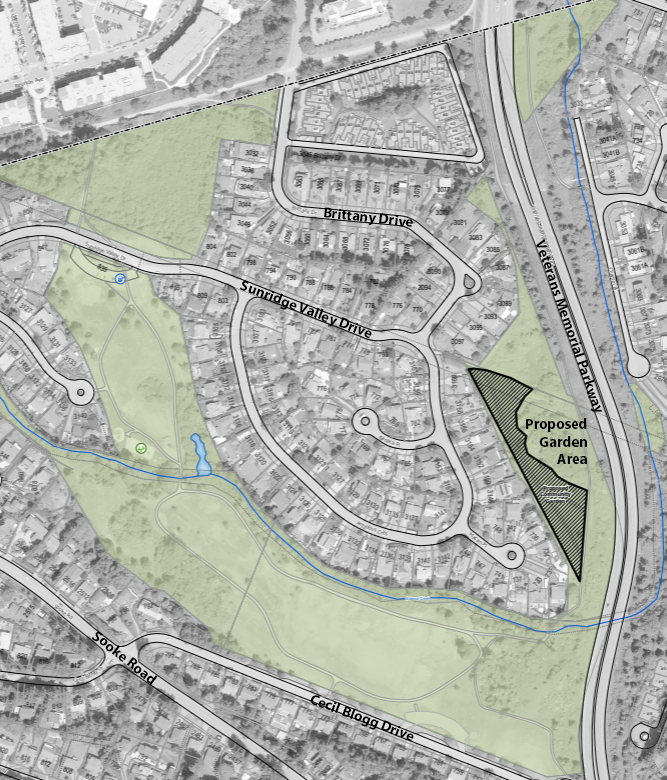
The Colwood Garden Society has proposed establishing a community garden in the area of Colwood Creek Park between Veterans Memorial Parkway and Brittany Drive. The Garden Society presented the proposal to Colwood Council on April 13, 2026. Colwood Council supported the proposal in principle and directed staff to work with the Society to consider implementation requirements.
Ultimately the proposal did not gain community support and has been withdrawn by the Society.
The garden was proposed to be located in the Agricultural Land on City park property. It would be funded, built, managed, and maintained (including water supply for irrigation) by the Colwood Garden Society, using the same model as the community garden at Colwood City Hall, so would not have tax implications. The Colwood Garden Society has received a grant of approximately $98k from Agriculture and Agri-Food Canada for the project.
Did you know?
Colwood has a detailed Parks Management Plan for Colwood Creek Park that includes new washrooms, play features, signage and more. Currently the entire park falls within the Agricultural Land Reserve which has temporarily paused park improvements. The City is negotiating the removal of approximately 80% of the park from the Agricultural designation to allow improvement plans to proceed. You can learn more about the ALR decision in this staff report to Colwood Council on December 8, 2025.
Why a community garden
Colwood Creek Park is on agricultural land, making it an appropriate location to host a community garden.
Community gardening contributes to health and well-being by reinforcing connections to nature and providing fresh, wholesome, nutritious food. Gardening encourages healthy outdoor activity, positive social interaction, protection and use of open space and all the benefits that come with growing local food: healthy eating, lower food costs, and community resilience if faced with food shortages or a large scale emergency.
Let's grow together
The Colwood Garden Society has proposed establishing a community garden in the area of Colwood Creek Park between Veterans Memorial Parkway and Brittany Drive. The Garden Society presented the proposal to Colwood Council on April 13, 2026. Colwood Council supported the proposal in principle and directed staff to work with the Society to consider implementation requirements.
Ultimately the proposal did not gain community support and has been withdrawn by the Society.
The garden was proposed to be located in the Agricultural Land on City park property. It would be funded, built, managed, and maintained (including water supply for irrigation) by the Colwood Garden Society, using the same model as the community garden at Colwood City Hall, so would not have tax implications. The Colwood Garden Society has received a grant of approximately $98k from Agriculture and Agri-Food Canada for the project.
Did you know?
Colwood has a detailed Parks Management Plan for Colwood Creek Park that includes new washrooms, play features, signage and more. Currently the entire park falls within the Agricultural Land Reserve which has temporarily paused park improvements. The City is negotiating the removal of approximately 80% of the park from the Agricultural designation to allow improvement plans to proceed. You can learn more about the ALR decision in this staff report to Colwood Council on December 8, 2025.
Why a community garden
Colwood Creek Park is on agricultural land, making it an appropriate location to host a community garden.
Community gardening contributes to health and well-being by reinforcing connections to nature and providing fresh, wholesome, nutritious food. Gardening encourages healthy outdoor activity, positive social interaction, protection and use of open space and all the benefits that come with growing local food: healthy eating, lower food costs, and community resilience if faced with food shortages or a large scale emergency.